

News & Events
NAPCORE at the ITS Congress 2026 in Istanbul
The 17th ITS European Congress organized by ERTICO took place from 27 to 29 April 2026 in Istanbul.
Cycling & walking
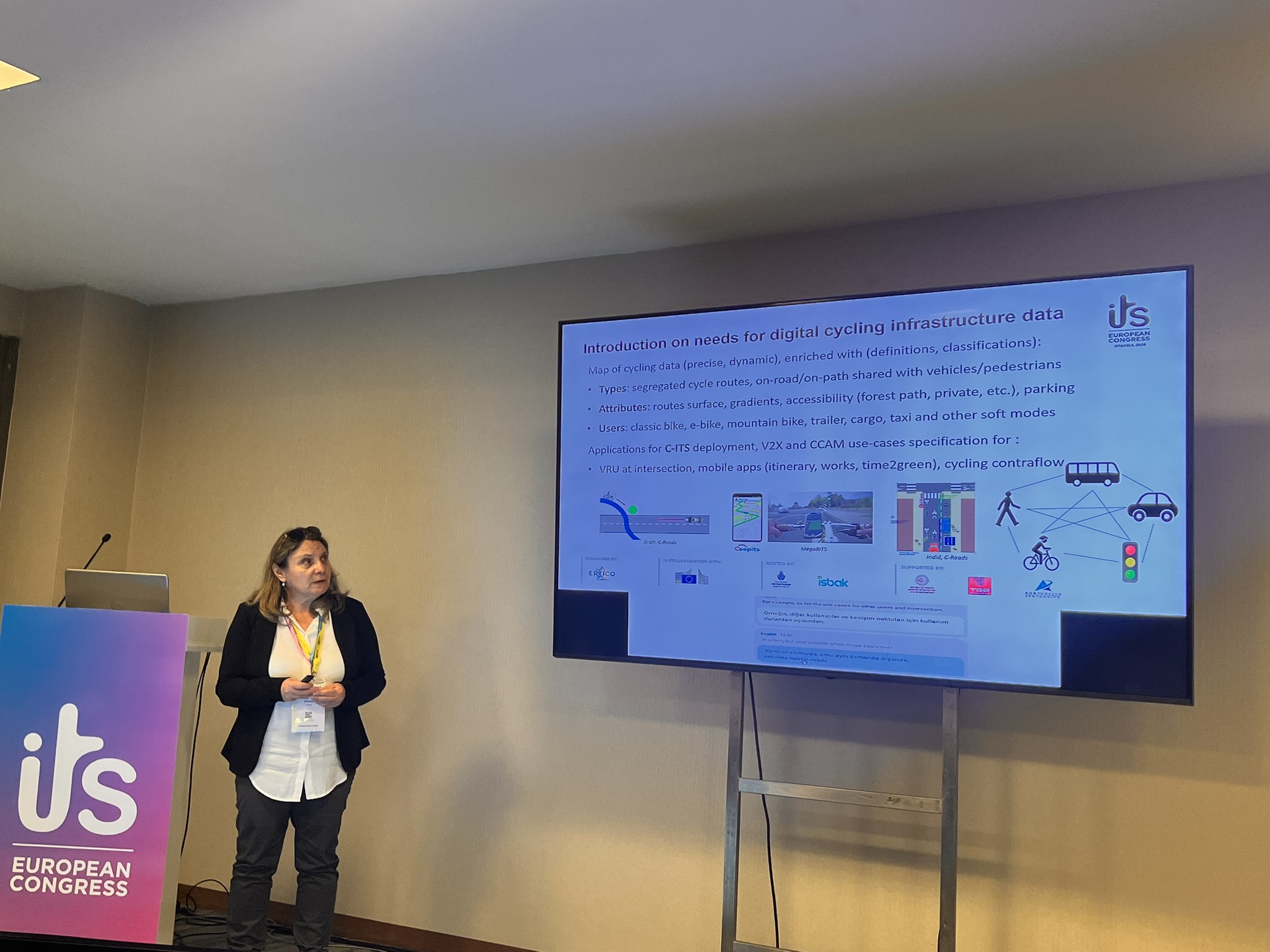
Cristina BURAGA (Cerema – France) as co-lead of the Cross-Domain Theme Cycling & walking of the NAPCORE project, was present with several publications related to cycling data:
“NAPCORE project: EU Digital Cycling Infrastructure data for connected mobility” in the specific session SIS12 “Multistakeholder Approaches to Advance the EU Digital Cycling Infrastructure” on 27 April 2026 – 16:45, which explored practical use cases, ongoing standardisation efforts, stakeholder collaboration platforms, and EU initiatives such as NAPCORE. Based on the results achieved as Ambassador for cycling data in the first phase of NAPCORE, Cristina presented concrete actions to integrate cycling data into traffic management and planning, in relation with the C-ITS deployment at EU-level to ensure safer, seamless mobility for all road users.
“Sensor evaluations for active modes” in the technical session TP8 “Emerging technologies for traffic & network management” on 28 April 2026 – 10:30, which highlighted innovative solutions to enhance smart and multimodal traffic management. More specifically, Cristina presented a methodology for evaluating technologies enabling the detection of active modes and the measurement of cycling traffic. The results of the tests on real-sites (greenways, urban cycle lanes) will guide recommendations for selecting the appropriate solutions adapted to the measurement needs of managers. Moreover, the insights will contribute to the development of interoperable standards for the metrology of emerging mobility solutions, at the European level.
In addition to the exchanges during the ITS congress exhibitions with various partners and industries of the C-ITS ecosystem, Cristina also moderated a highly innovative research session on urban air mobility, which brought new perspectives from a technological, societal and environmental point of view. All these advances have to be considered in the future developments of multimodal transport, and particularly in the harmonization of transport data exchange for the coordination of NAPs.
mobilityDCAT-AP
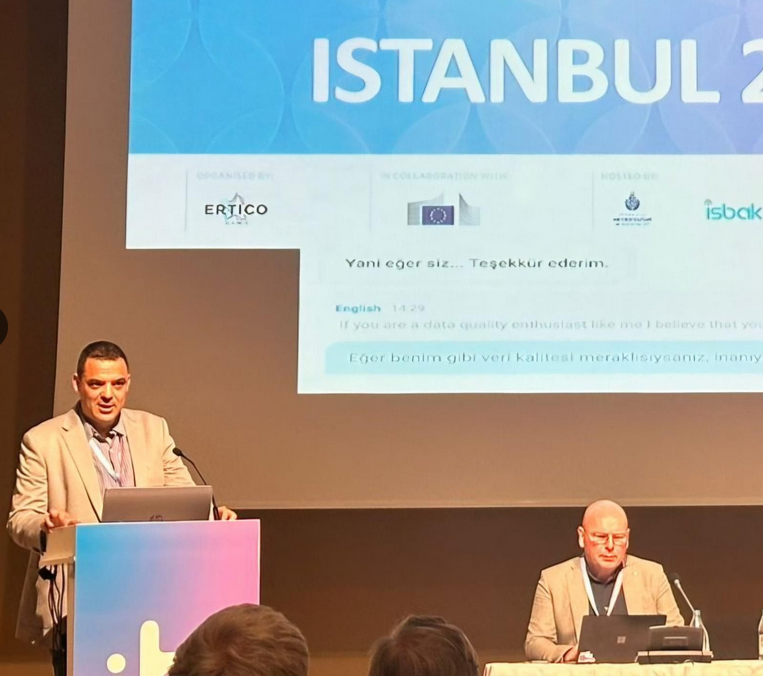
Jasper BEERNAERTS (NGI Brussels) on April 27 – 16:45 at the TP 2 presented the paper: “mobilityDCAT-AP in Practice: Compliance Analysis of European NAPs and the Belgian Reference Implementation” in which is reported how “National Access Points (NAPs) play a central role in implementing the ITS Directive by providing harmonised access to mobility data across Europe. mobilityDCAT-AP offers a semantically rich metadata model to support cross-border interoperability, yet its practical adoption has not been systematically evaluated. This paper presents the first comprehensive compliance analysis of mobilityDCAT-AP implementations across five European NAPs. Using validated and normalised RDF graphs, we assess adherence to mandatory, recommended, and controlled-vocabulary requirements, and identify common modelling and syntactic issues that hinder interoperability. Belgium’s Transportdata.be, developed through an extended CKAN stack, is examined as a reference implementation demonstrating that full mandatory compliance is achievable. Our results reveal substantial differences in implementation maturity, with controlled vocabulary usage and dataset completeness emerging as key barriers to cross-portal queries. Based on these findings, we provide technical recommendations, validation tools, and stakeholder engagement strategies to support future deployments and strengthen Europe-wide mobility data integration.”
Additionally, in the paper and during the ITS Congress, a tool was presented that is available free of charge for all National Access Point Operators to assess the quality of their RDF endpoints. This Tool will be updated in the future to version 3.0, which should be released by the end of the year by Working Group 4.4 of the NAPCORE project.
Building the Digital Backbone: Data Quality, Tools, and Readiness for Future European Mobility
Rodolfo DA SILVA (KIOS CoE – University of Cyprus) spoke:
On April 27 – 14:00 at SIS 3: “Building the Digital Backbone for Smarter Mobility: National Access Points and Integrated Travel Information”.This session highlighted the work carried out in NAPCORE Phase 1 on data quality, including the development of quality frameworks, assessment methodologies, and recommendations to support National Access Points and mobility data providers. The discussion also presented the planned enhancements in the current NAPCORE-X phase, focusing on the further development, harmonisation, and practical application of these quality frameworks. In addition, the session explored how the resulting outputs can be leveraged by the TISGRADE project to support the assessment and improvement of data quality for priority ITS services, strengthening the link between European quality frameworks and real-world deployment activities.
On April 28 – 13:30 at the TP 11: “Multi-Criteria Methodology for Prioritising Data Quality Tools in ITS”. This technical paper, building on the results of NAPCORE Milestone 4.2.7 from the previous project phase, presented a methodology for the selection and prioritisation of data quality tools in ITS. The approach helps organisations identify the most suitable solutions to improve data quality and contributes to ongoing NAPCORE activities related to data quality frameworks, assessment processes, and best practices.
On April 29 – 09:00 at SIS 50: “Future Urban Mobility Indicators: Data Readiness and Collaborative Collection for New Urban Node Requirements”. The session focused on the challenges and opportunities related to collecting and managing ITS mobility data for Urban Node indicators under the revised TEN-T Regulation. Discussions highlighted the importance of data readiness, stakeholder collaboration, and harmonised approaches to data collection and quality improvement. The session also explored how National Access Points (NAPs) and the NAPCORE project can contribute to the efficient collection, sharing, and management of these indicators, supporting future reporting requirements and the assessment and monitoring of Sustainable Urban Mobility Plans (SUMPs) across Europe.